 |
 |
 |
|
 |
|
 |
|
 |
|
 |
|
 |
| Sustainability > Building Prosperity That Lasts |
Sustainability
| Creating lasting impact through Islamic finance by empowering people, strengthening communities, supporting responsible economic growth and safeguarding the future.
For more than four decades, Bank Islam has believed that banking should create value beyond financial returns. As Malaysia’s pioneering Islamic bank, we recognize that every financial decision has the potential to improve lives, strengthen communities and contribute to a more resilient future. Guided by Shariah principles, sustainability is not a separate agenda. It is embedded in how we finance growth, manage risks, serve customers and fulfill our responsibility to society. This is how we build prosperity that lasts. |
|
|
| At Bank Islam, sustainability means creating long-term value while balancing the needs of people, prosperity and the planet. |
|
|
► |
Our Sustainability Journey |
|
|
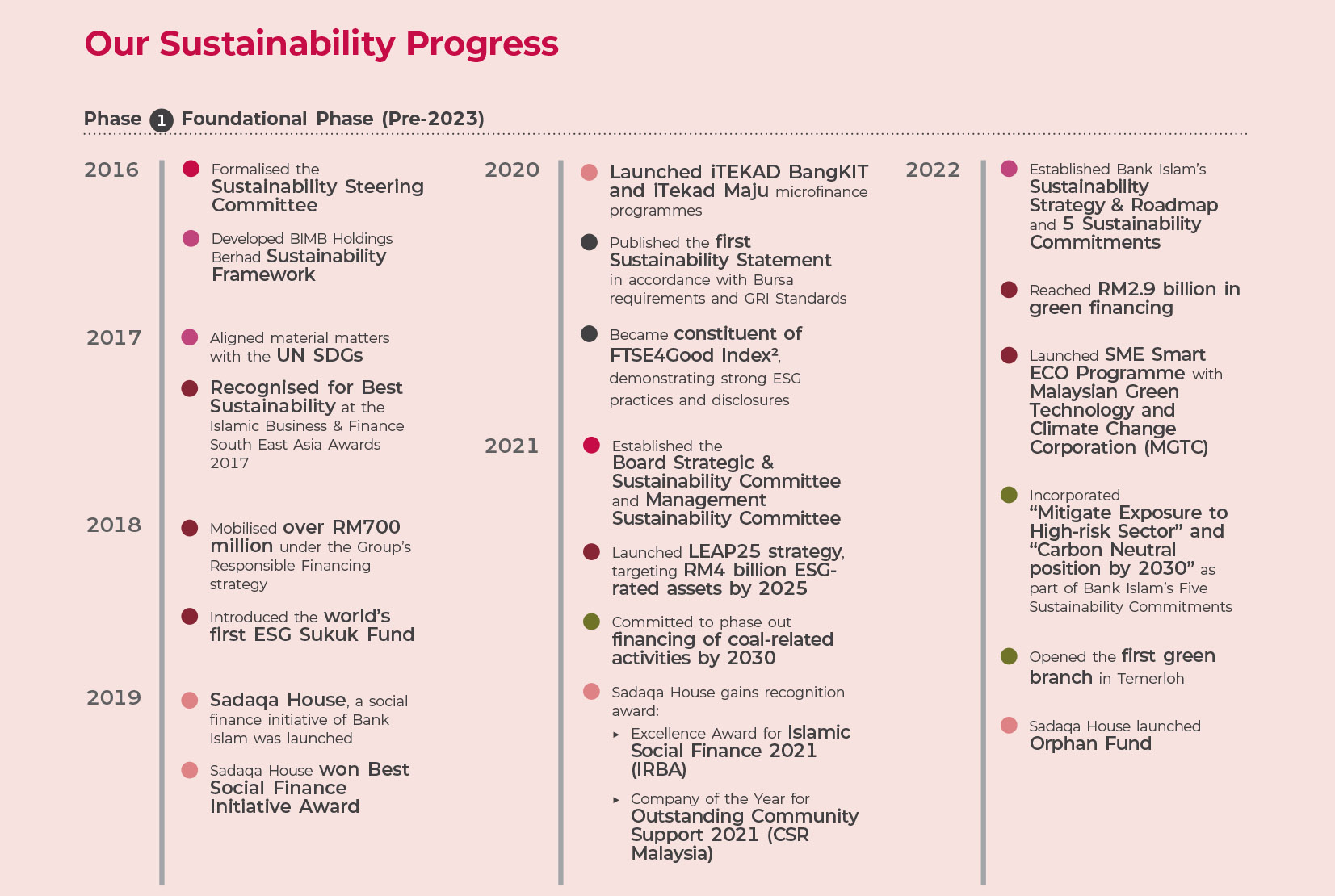
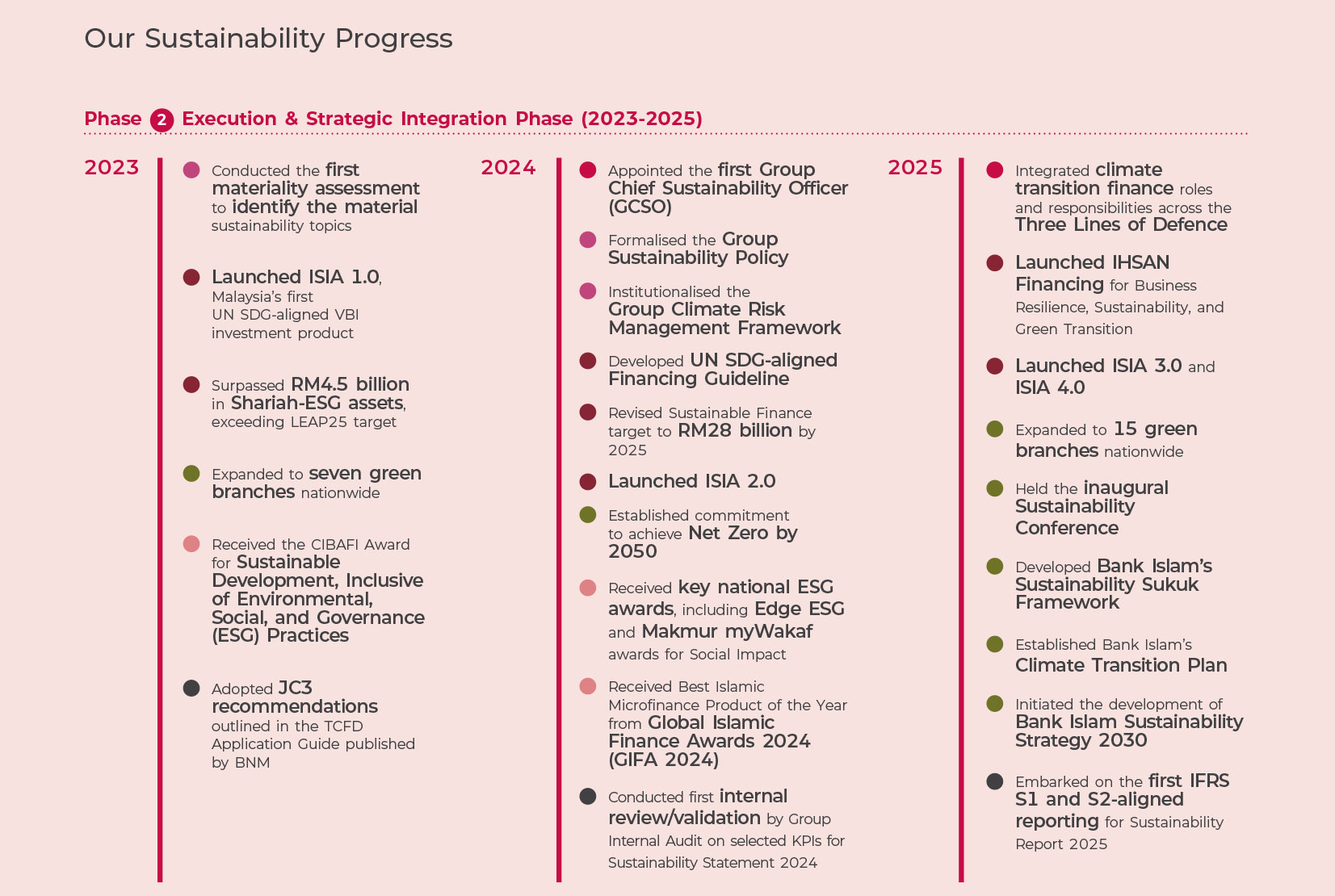
| Our sustainability journey began in 2015, when we were among the earliest Islamic financial holding companies in Malaysia to pioneer sustainability integration. Since then, we have evolved — strengthening our focus on social finance, sustainable financing, climate transition and ESG leadership, securing long-term value creation for all stakeholders. |
|
|
|
|
► |
Memberships and Associations |
|
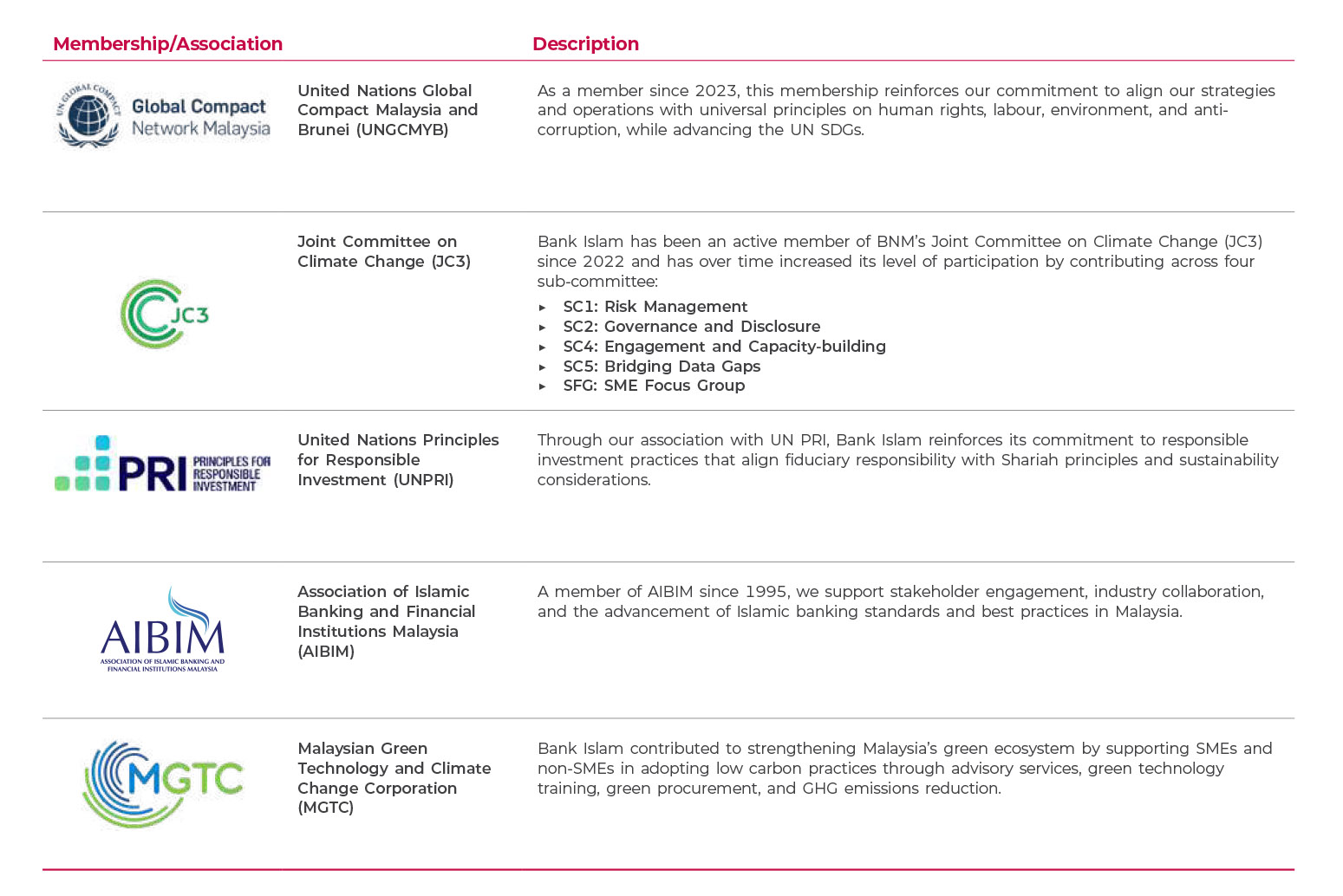
Creating a sustainable future requires collaboration. Bank Islam actively works with regulators, industry bodies, government agencies, academic institutions and community organisations to accelerate sustainable development and create shared value. |
|
|
|
|
|
|
|
► |
Integrating Sustainability Strategy and Roadmap |
| Introducing Our New Sustainability Strategy 2030 With the conclusion of the SSR in 2025, the Group has delivered meaningful progress and gained critical insights that have strengthened how sustainability and climate is embedded across the organisation. This provides a strong foundation for the next phase of our sustainability journey, enabling a more deliberate focus on multiplying long-term value creation. Building on this foundation, Bank Islam is rolling out its Sustainability Strategy 2030 as an integral component of the Group’s new corporate strategy. The strategy reflects a clear progression in maturity, strengthening alignment between ESG priorities and long-term strategic direction, and positioning Bank Islam as the preferred universal Islamic financial institution by 2030. The Sustainability Strategy 2030 will be anchored by the outcomes of our double materiality assessment, which identifies and prioritises the sustainability matters most relevant to the Group. This ensures the strategy is grounded in a clear understanding of Bank Islam’s impacts on the economy, environment, and society, as well as the sustainability-related risks and opportunities that may influence long-term business performance. In addition, our approach incorporates feedback from key stakeholder groups, including regulators, industry partners, clients, and the community. Key considerations include: 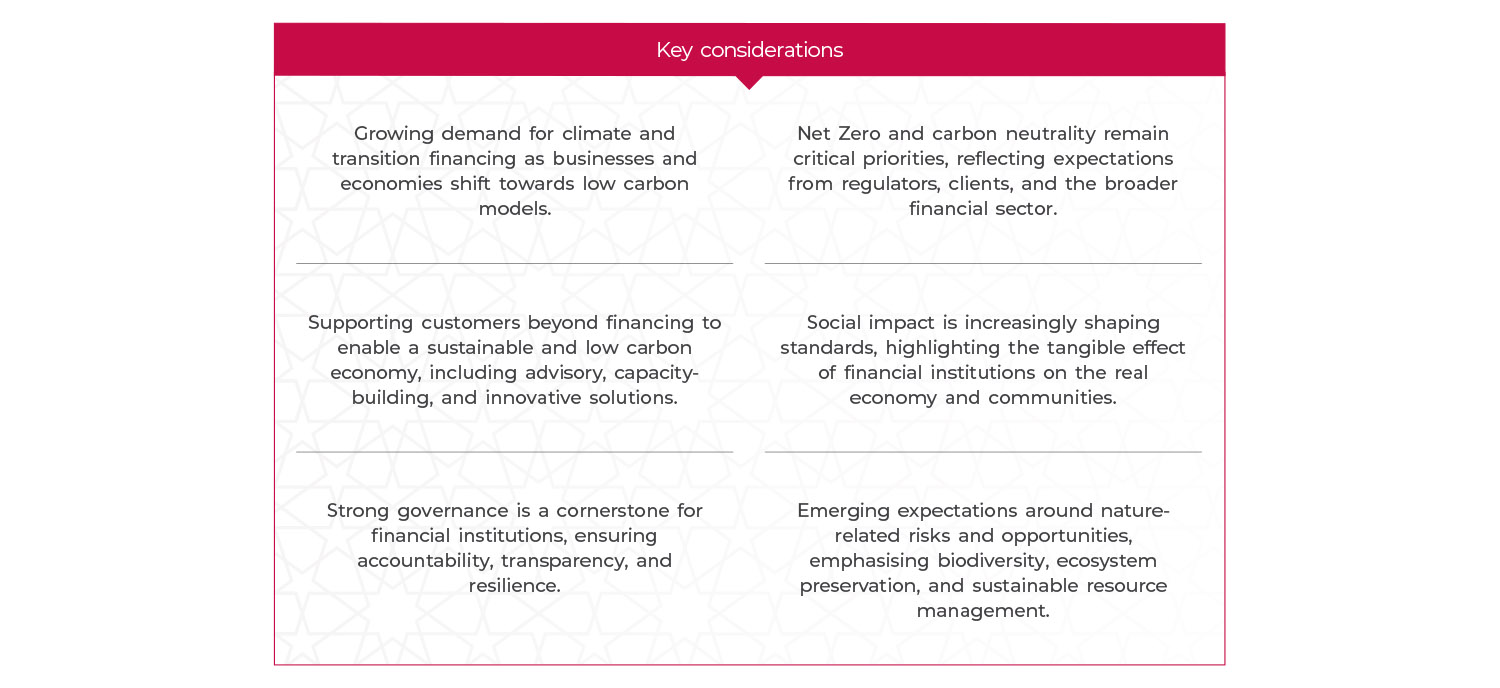
|
|
|
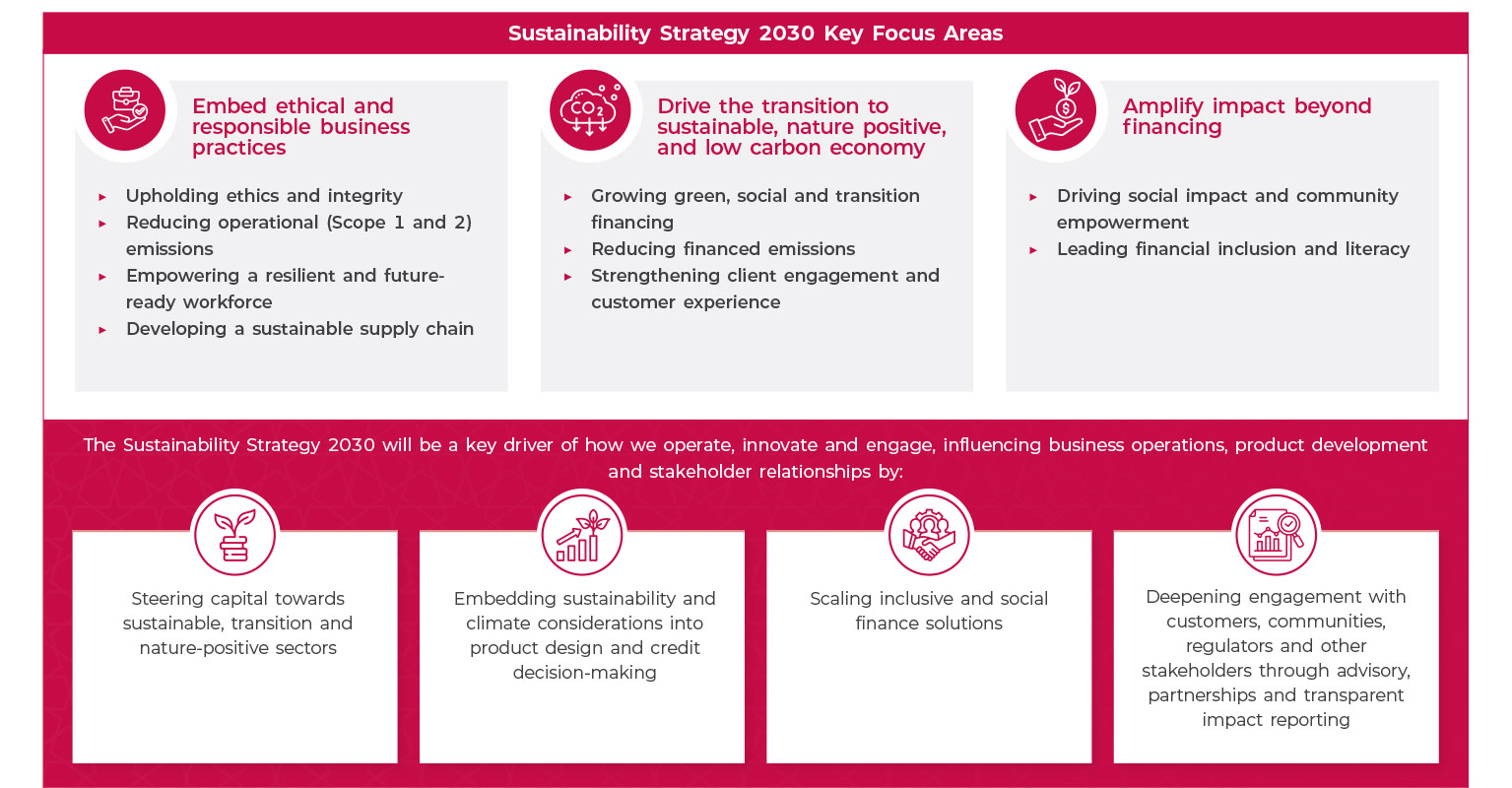
The strategy is structured around three strategic directions that define our key focus areas and priority outcomes for the decade ahead. |
|
|
|
|
Our Sustainability Strategy 2030 positions Bank Islam to lead with purpose. Through focused climate action, strengthened governance, and meaningful social impact, we are driving sustainable growth and creating value that extends beyond finance, into society and the environment |
|
|
|
|
|
► |
Delivering Our Sustainability Commitments |
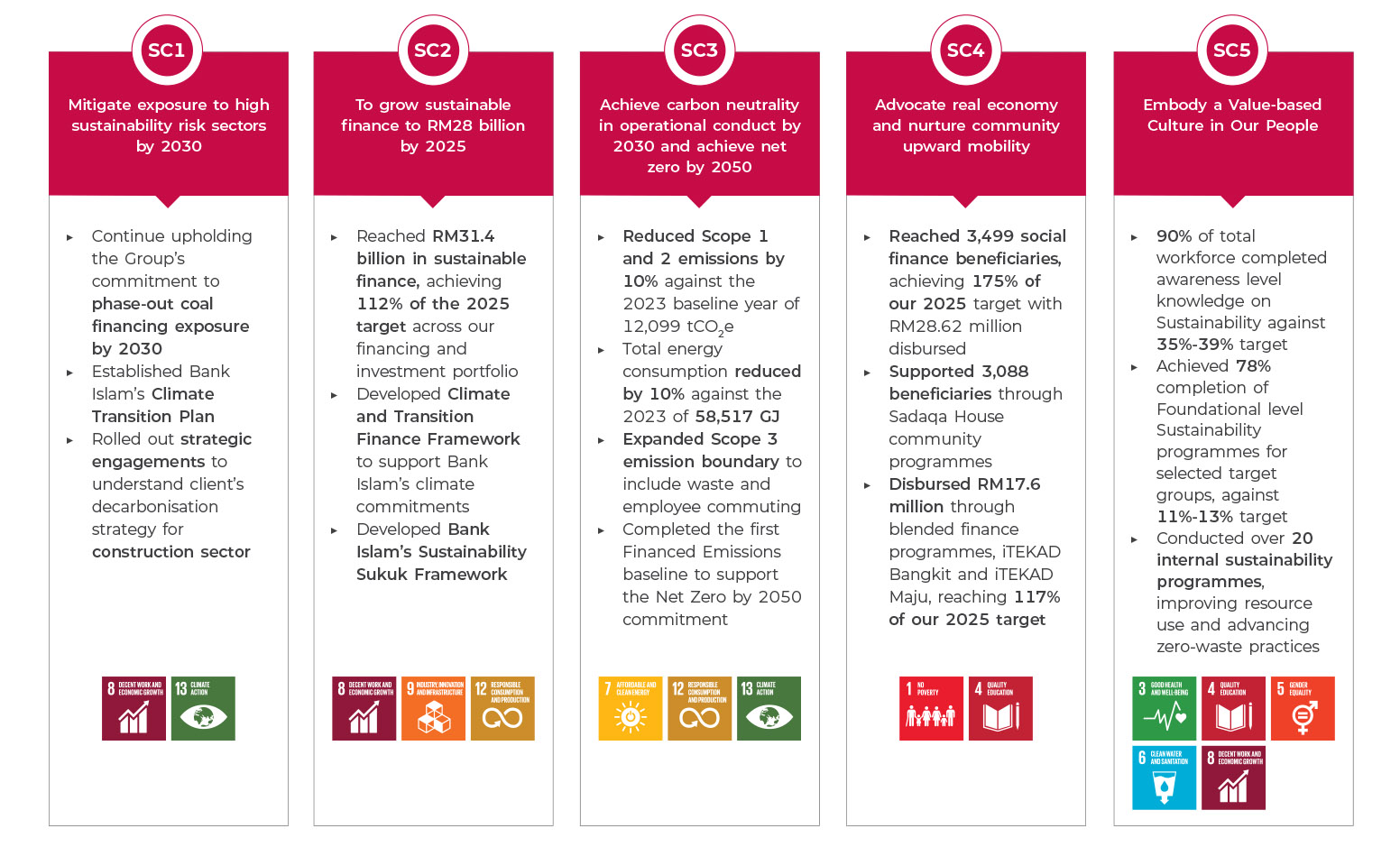
Our Sustainability Commitments Our five SCs are grounded in the SSR and focus on areas where Bank Islam can create the greatest positive impact through our business and operations. They reflect our priority sustainability impacts, align with regulatory and stakeholder expectations, address our most material sustainability matters, and consider relevant peer and industry practices.
|
|
|
|
|
|
|
|
► |
Oversight of Sustainability Governance |
|
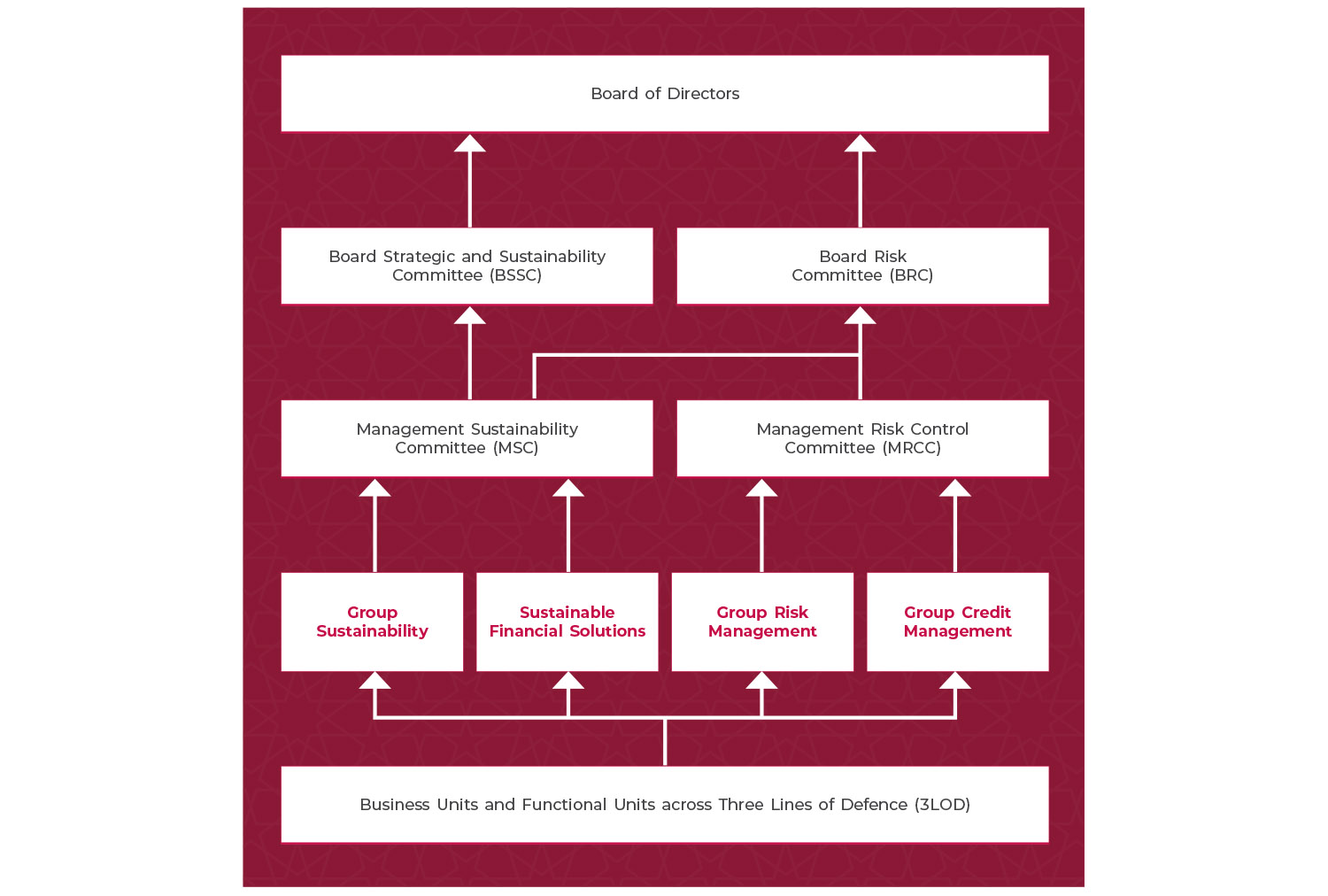
At Bank Islam, sustainability governance ensures accountability and transparency at every level of decision-making. |
|
|
|
|
This governance ensures that sustainability remains central to our mission of creating long-term value for all stakeholders.
Sustainability Governance At Bank Islam, sound governance is embedded in how we operate and conduct ourselves, shaping decision making, culture, and accountability at every level of the organisation, from our BITIZENs to Management and the Board. The Board is responsible for the oversight of the Group and its overall governance and performance, supported by six Board Committees that provide effective and responsible decision-making, assisting Bank Islam in delivering on its strategy and purpose. Each Board Committee has its own Terms of Reference (TOR), which sets out its roles and responsibilities, available at Bank Islam’s website. At the management level, the Group Management Executive Committee comprises Bank Islam’s Senior Management. A delegation of authority framework outlines matters delegated from the Board to our Group Chief Executive Officer (GCEO) and other members of senior management. In addition, several formally established management committees oversee specific areas of ongoing operations, including sustainability and climate matters. Sustainability governance at Bank Islam is embedded across the Board, management, and operational levels, aligned with the Three Lines of Defence (3LOD) model. The first line, comprising business units and functions, is responsible for integrating sustainability considerations into day-to day operations and decision-making. The second line provides oversight, guidance, and monitoring to ensure compliance with ESG standards, climate related frameworks, and internal policies. The third line, Group Internal Audit, offers independent assurance on the effectiveness of sustainability governance, risk management, and internal controls, ensuring accountability and continuous improvement
|
|
|
|
 |
 |
 |
 |
|
|
|
|
 |
 |
 |
|
|